

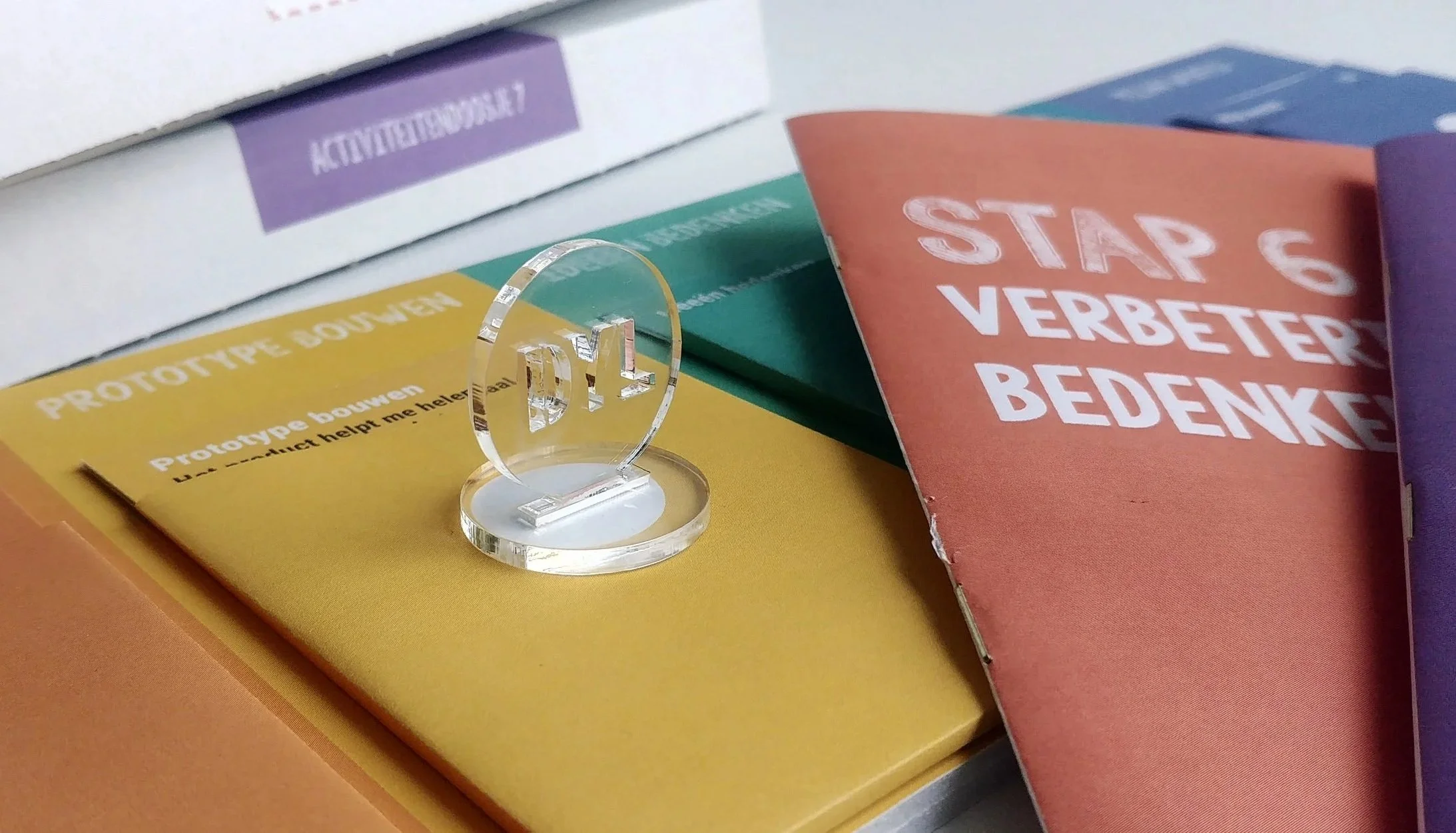
Design Your Life: a toolkit for and with young autistic adults
Master of Science thesis
November 2020-August 2021
University of Twente, the Netherlands
This case study was part of the Design Your Life project: a project aimed at empowering young autistic adults to create personal products that promote their independence. The Design Your Life method uses co-design at its centre and uses the embodied enactive approach to explain communication. For this project, I created and tested a toolkit with a young autistic adult and their professional caregiver. In this case study I had a special emphasis on the communication between the participants and how the toolkit influenced this.
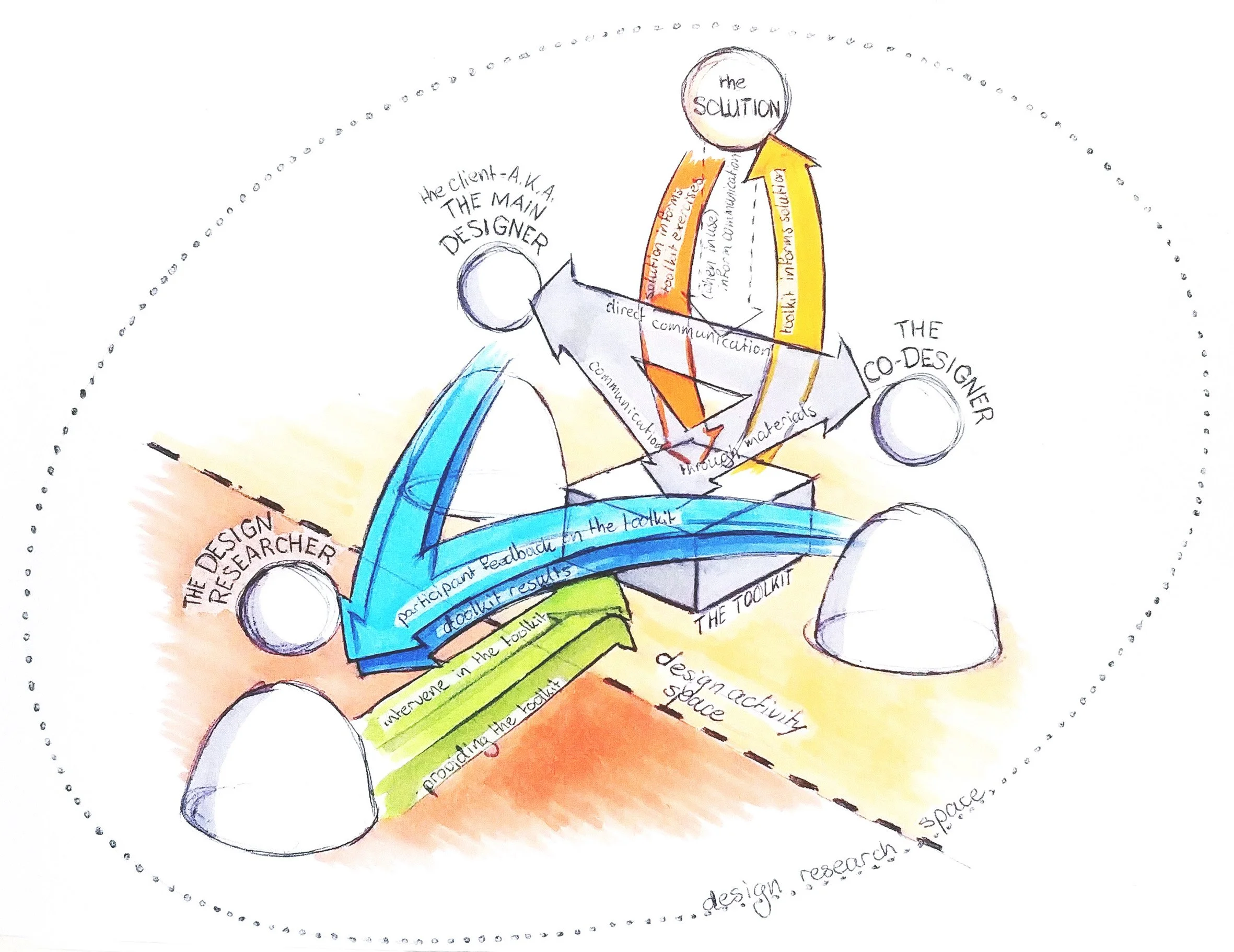
The communication flow
In traditional co-design methods, a co-design facilitator is present to guide the participants through the activities. This toolkit was created in such a way that the toolkit itself would serve as co-design facilitator. The designer/researcher (me) creates and delivers the toolkit. The participants execute activities from the toolkit, interacting with and through the materials. By doing so the participants move through a design process. During this process, a design solution starts to form. The participants share their activity outcomes and their feedback with the designer/researcher. This information is used by the designer/researcher to create new activities or to help the participants.
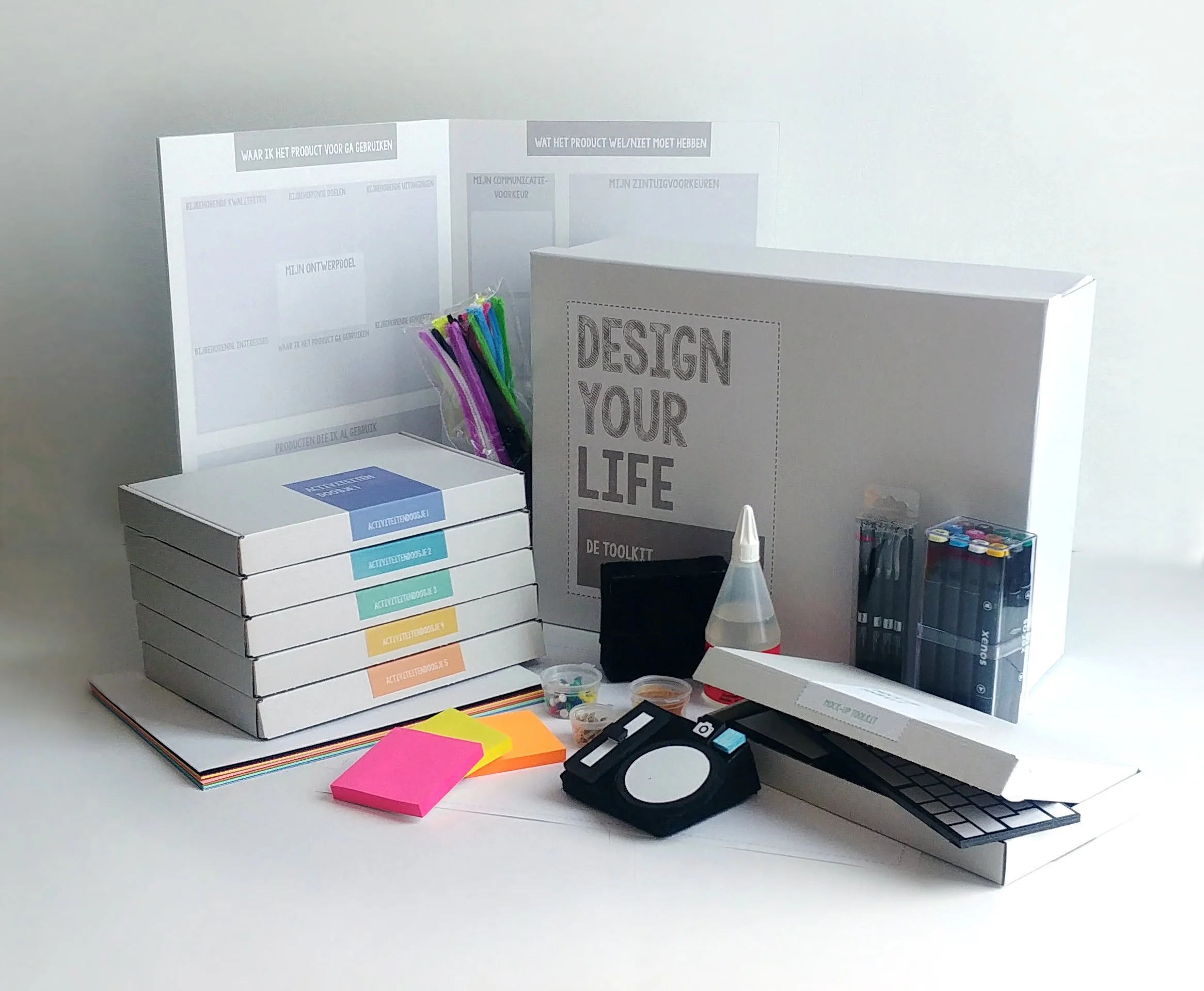
The toolkit: first design round
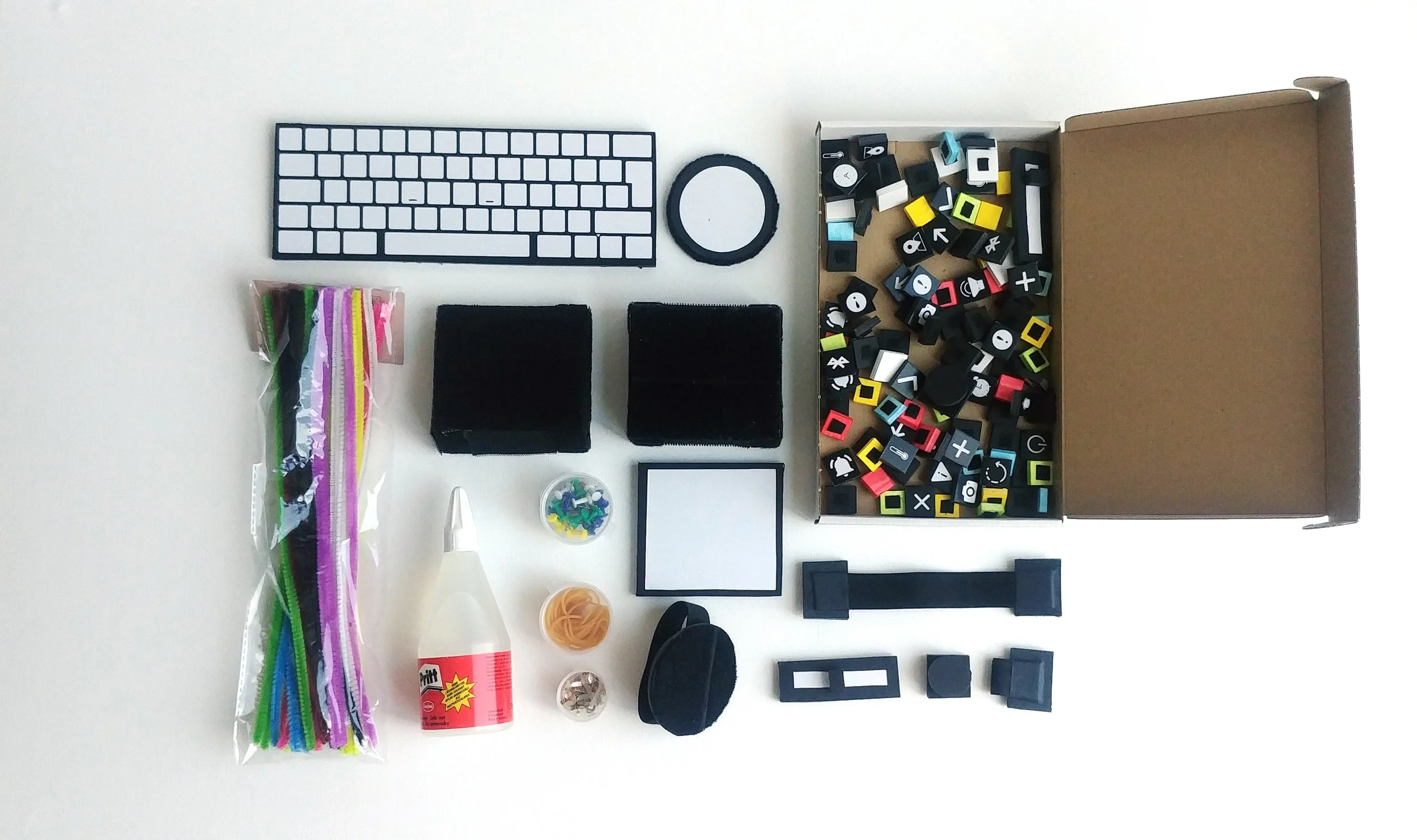
The toolkit consists of two ‘design rounds’: two iterative design cycles that the participants go through. The first design round consists of a set of activity boxes, each containing all the activities, related materials and explanations for one design phase. These phases, inspired by d.school’s design process [1], are: understand, define, ideate, prototype, test and evaluate. The activity outcomes are recorded on the design board. This board is used as a central point of reference in the participant’s design process.
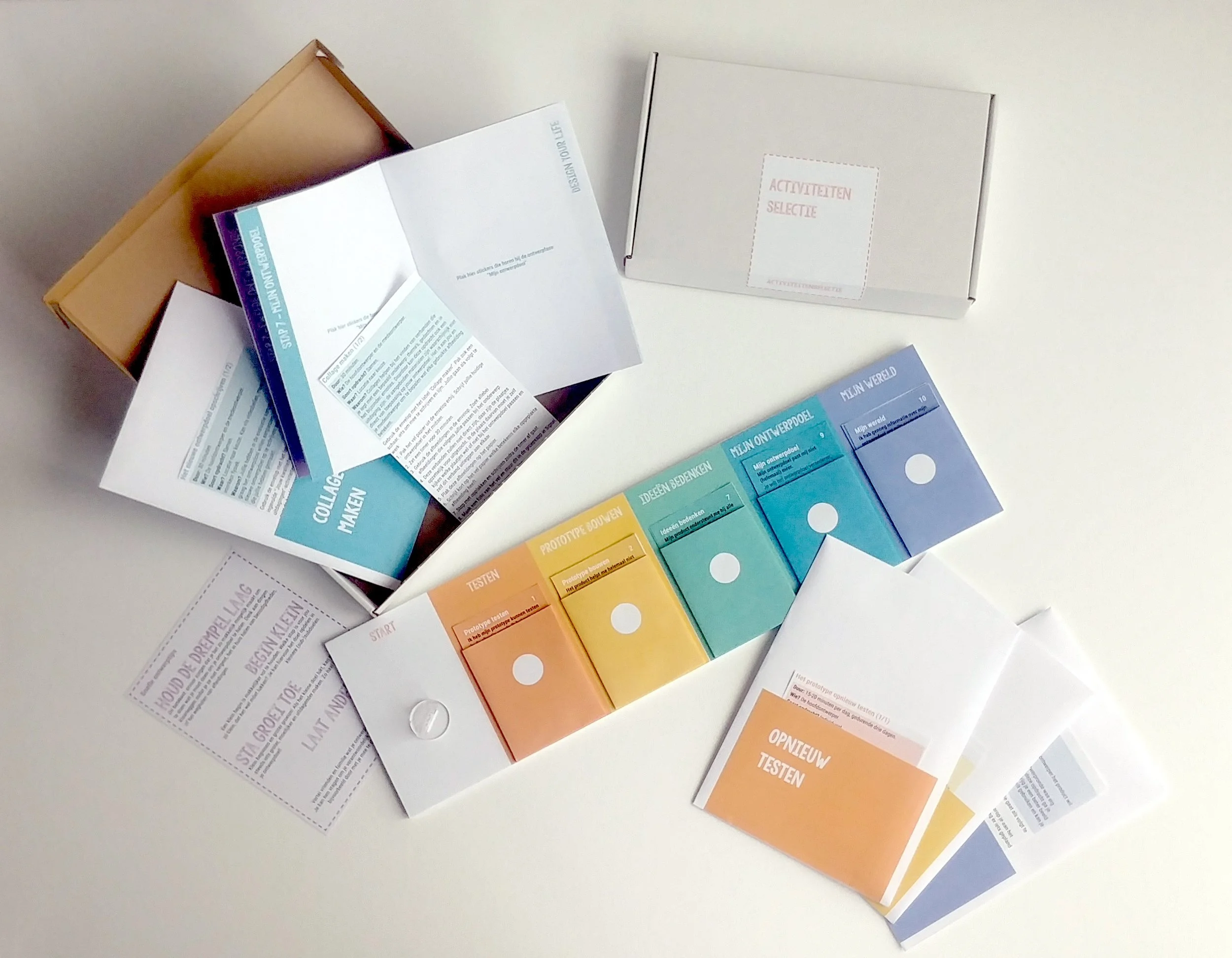
The toolkit: second design round
The participants use this design round to reflect on their prototype and design process. They do this using a board game that allows them to select activities that will help them to supplement their understanding of the design goal and improve their prototype.
Impact
The participants experienced a positive impact on their relationship: the participants explain that this has deepened. Simply spending more time together was one factor, but others were the conversations that the activities sparked, and the match between the participants and the designer/researcher.
The Design Your Life project continued for two more years after concluding the case study. I was part of this further development in the six months directly following wrapping up the case study. In the two-year period, the Design Your Life toolkit underwent several more iterations which were based on the results of my and other’s case studies within the same project. The result is a final toolkit with openly available source materials, and a community website, NDHacks.nl. In 2024, the Design Your Life project was awarded the RAAK award, a Dutch award recognising research making a direct positive impact on practices.
Publications related to this case study
Van Huizen, N., Waardenburg, T., Overdevest, N., Van Dijk, J., Staal, W., and Van der Voort, M. (2022) Towards a toolkit to empower young autistic adults: Using grounded theory to analyze ten design case studies, in Lockton, D., Lenzi, S., Hekkert, P., Oak, A., Sádaba, J., Lloyd, P. (eds.), DRS2022: Bilbao, 25 June - 3 July, Bilbao, Spain. https://doi.org/10.21606/drs.2022.432
References
S. Doorley, S. Holcomb, P. Klebahn, K. Segovia, and J. Utley. 2018. Design Thinking Bootleg. Retrieved April 4, 2025 from https://dschool.stanford.edu/tools/design-thinking-bootleg